Ask ten slot players what determines whether they win, and you'll get ten different theories. Hot machines, cold streaks, the time of day, whether you tipped the waitress. The truth is less mystical and more useful: every spin is governed by math you can actually understand, and once you do, you stop chasing ghosts and start making smarter decisions.
I've spent years watching players burn through bankrolls on autopilot while others stretch the same money across an entire evening. The difference usually isn't luck. It's a handful of concepts that casinos don't exactly hide, but they don't explain them at the cashier either.
Return to Player (RTP) is the theoretical percentage of all wagered money a game pays back over millions of spins. A slot with 96% RTP returns 96 cents for every dollar wagered, on average, across an enormous sample. The remaining 4% is the house edge — the casino's built-in profit margin. Take a look at kèo nhà cái for a fuller picture.
Here's what trips people up: RTP is not a promise for your session. You can play a 96% RTP slot for three hours and lose 60% of your bankroll, or double it. RTP only reveals itself over durations no human will ever play. What it does tell you is the long-run cost of entertainment. Compare two slots:
Play 500 spins at $1 each — $500 wagered — and Slot A expects to cost you $17.50 while Slot B expects $40. Same entertainment, more than double the cost. Over a year of regular play, that gap funds a vacation.
Rule of thumb: anything above 96% is generous, 94–96% is standard for modern video slots, and anything below 93% deserves scrutiny — especially since some popular licensed titles have RTP configurations as low as 90% depending on the operator.
Two slots can share identical RTP and deliver wildly different experiences. That's volatility, sometimes called variance, and it describes how wins are distributed.
Low volatility slots pay small amounts frequently. Think classic three-reel machines and many fruit slots. Your bankroll grinds down slowly, sessions last longer, and big wins are rare because there aren't any.
High volatility slots pay rarely but can pay enormously. Gates of Olympus, Money Train, and most Megaways titles fall here. You might endure 200 dead spins, then hit 800x on a bonus. The math works out, but the ride is brutal without sufficient bankroll.
Practical bankroll sizing follows volatility. A common approach uses 100–200x your average bet for low volatility, 200–300x for medium, and 500x or more for high. Betting $1 on a high-volatility slot with a $50 bankroll is mathematical suicide — you'll likely bust before the variance has a chance to swing your way.
Feature buys — paying 80x to 200x your stake to trigger free spins instantly — exploded because they compress hours of variance into one spin. They're not inherently bad value; most are priced so the expected return matches or slightly undercuts the base game RTP.
But understand what you're buying: a single high-variance lottery ticket. Buying a $100 bonus on a 100x feature is mathematically identical to spinning $100 worth of the base game with all outcomes resolved immediately. If you enjoy the base game's pacing, buying skips the entertainment you paid for and jumps straight to the result. For more on this, see trang cá cược bóng đá.
My honest take: bonus buys suit players with large bankrolls and short time windows. For everyone else, they accelerate losses without changing expected value.
Slots and most table games are negative expected value propositions. Poker is different — you play against other players, not the house, and the casino takes a rake. A skilled player at a soft table can be genuinely profitable.
But skill doesn't mean aggression. The biggest leaks I see in low-stakes games:
If you're serious about poker, track results over at least 10,000 hands. Anything less is noise masquerading as signal.
Sportsbooks rarely offer identical odds. One book might price a favorite at -110 while another hangs -105. That 5-cent difference sounds trivial until you calculate it over hundreds of bets.
Bet $100 at -110 and win: you profit $90.91. Bet $100 at -105 and win: you profit $95.24. That's nearly 5% more return on every winning bet, purely from where you placed it. Over a season, line shopping separates break-even bettors from profitable ones.
The other professional habit is beating the closing line — the final odds before an event starts. If you consistently bet numbers better than the closing line, you're likely sharp, because closing lines reflect the market's most informed consensus. If you're always betting worse numbers than close, no amount of game knowledge will save you.
None of this makes casino games beatable. Slots and house-banked games have negative expected value by design; that's the business model, and no strategy changes arithmetic. What understanding RTP, volatility, and odds actually gives you is control — over how long your money lasts, how much entertainment you extract per dollar, and whether you're playing a fair-feeling game or an unusually expensive one.
The players who enjoy this hobby longest aren't the ones who win most. They're the ones who treat the house edge as a known subscription fee rather than an enemy to defeat, set limits before logging in, and walk away when the number hits. That's not a buzzkill philosophy. It's the only strategy that has ever actually worked.

Turning garden land into a building plot hinges on planning policy, access, services and neighbour objections — most...
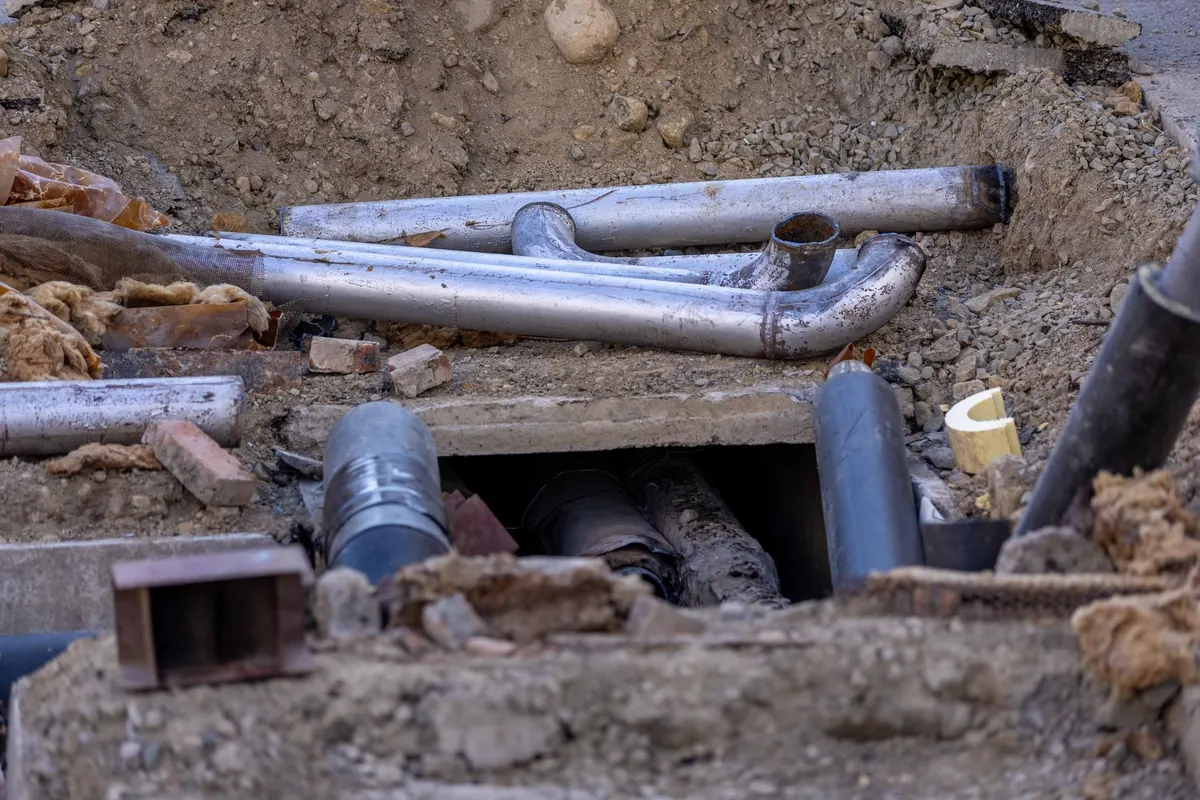
A practical breakdown of the costs and connection processes for water, electricity, drainage and broadband on a...

Landlocked plots have no automatic right of access. Here is how easements, rights of way, prescriptive claims and...

Find the right plot for your project.
